
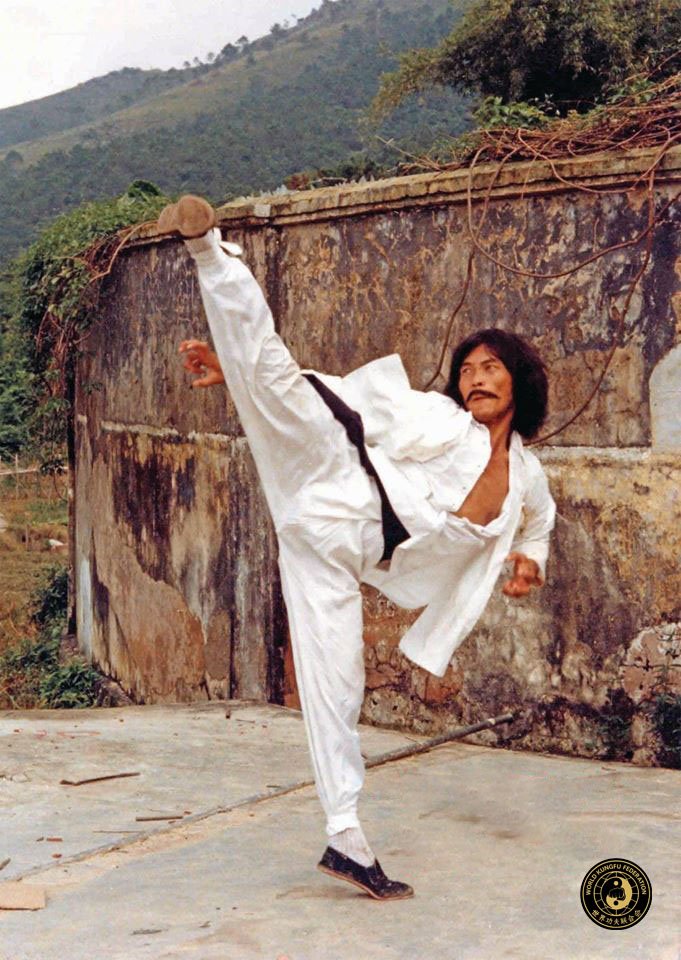
Few figures in martial arts history have achieved the legendary status of Hwang Jang‑Lee, the Korean grandmaster whose explosive kicking techniques and unforgettable screen presence reshaped the landscape of kung fu cinema. Revered by practitioners, filmmakers, and fans worldwide, Hwang stands as one of the most influential martial artists of the 20th century—an enduring symbol of precision, discipline, and technical mastery.
Hwang Jang‑Lee was born on 21 December 1944 in Aomori, Honshu, Japan, to Korean parents. His family returned to Korea shortly after his birth. He began training in Taekwondo at age 14, quickly demonstrating exceptional aptitude and discipline. By age 21, he had already earned a 7th‑dan black belt and was serving as a martial arts instructor for both the Republic of Korea Army and the South Vietnamese military during the Vietnam War.
His lifelong dedication to martial arts led him to achieve 9th‑dan ranks in both Taekwondo and Tang Soo Do, later becoming an instructor and technical adviser for the World Tang Soo Do General Federation.
Hwang’s transition to film began in the early 1970s, but his breakthrough came when Hong Kong producer Ng See‑yuen cast him as the villain Silver Fox in The Secret Rivals (1976). His astonishing kicking ability—fast, high, and devastatingly precise—instantly set him apart from every other screen fighter of the era.
His fame skyrocketed with two landmark films of 1978:
- Snake in the Eagle’s Shadow
- Drunken Master
In both films, he faced a young Jackie Chan, delivering some of the most iconic villain performances in martial arts cinema. His portrayal of Thunderfoot/Thunderleg in Drunken Master remains one of the most celebrated antagonists in kung fu history.
Hwang’s kicks were so powerful and precise that during filming he accidentally knocked out one of Jackie Chan’s teeth—an incident Chan himself has recounted with respect rather than resentment.
Hwang earned nicknames such as:
- “King of the Legfighters”
- “Silver Fox”
- “Thunderleg” / “Thunderfoot”
These titles reflect his unmatched mastery of kicking techniques. His signature style emphasized:
- Hip‑driven circular power
- High‑impact precision
- Exceptional flexibility
- Lightning‑fast execution
His instructional influence extended beyond film. His student Roy Horan later produced The Art of High Impact Kicking (1982), based directly on Hwang’s methods.
In 1981, Hwang directed and starred in Hitman in the Hand of Buddha, showcasing his ability not only as a performer but also as a filmmaker and choreographer. He continued to appear in major productions throughout the 1980s, including:
- The Invincible Armour (1977)
- Dance of the Drunk Mantis (1979)
- Ninja in the Dragon’s Den (1982)
- Millionaires Express (1986)
After retiring from acting in the 1990s, Hwang returned to teaching, conducting seminars and tours across the United States and Canada to promote traditional Korean martial arts.
Hwang Jang‑Lee’s legacy extends far beyond cinema. He is celebrated as:
- A grandmaster who preserved and promoted traditional Korean martial arts
- A global ambassador of high‑level kicking techniques
- A cinematic icon whose performances influenced generations of martial artists and stunt performers
- A technical adviser and instructor shaping the next generation of practitioners
His philosophy emphasizes that true kicking power comes not from the legs alone, but from the hips, body mechanics, and disciplined training—a principle now widely adopted in modern martial arts instruction.