
When martial arts enthusiasts discuss the evolution of combat sports, one name bridges the gap between traditional wisdom and modern application: Bruce Lee.
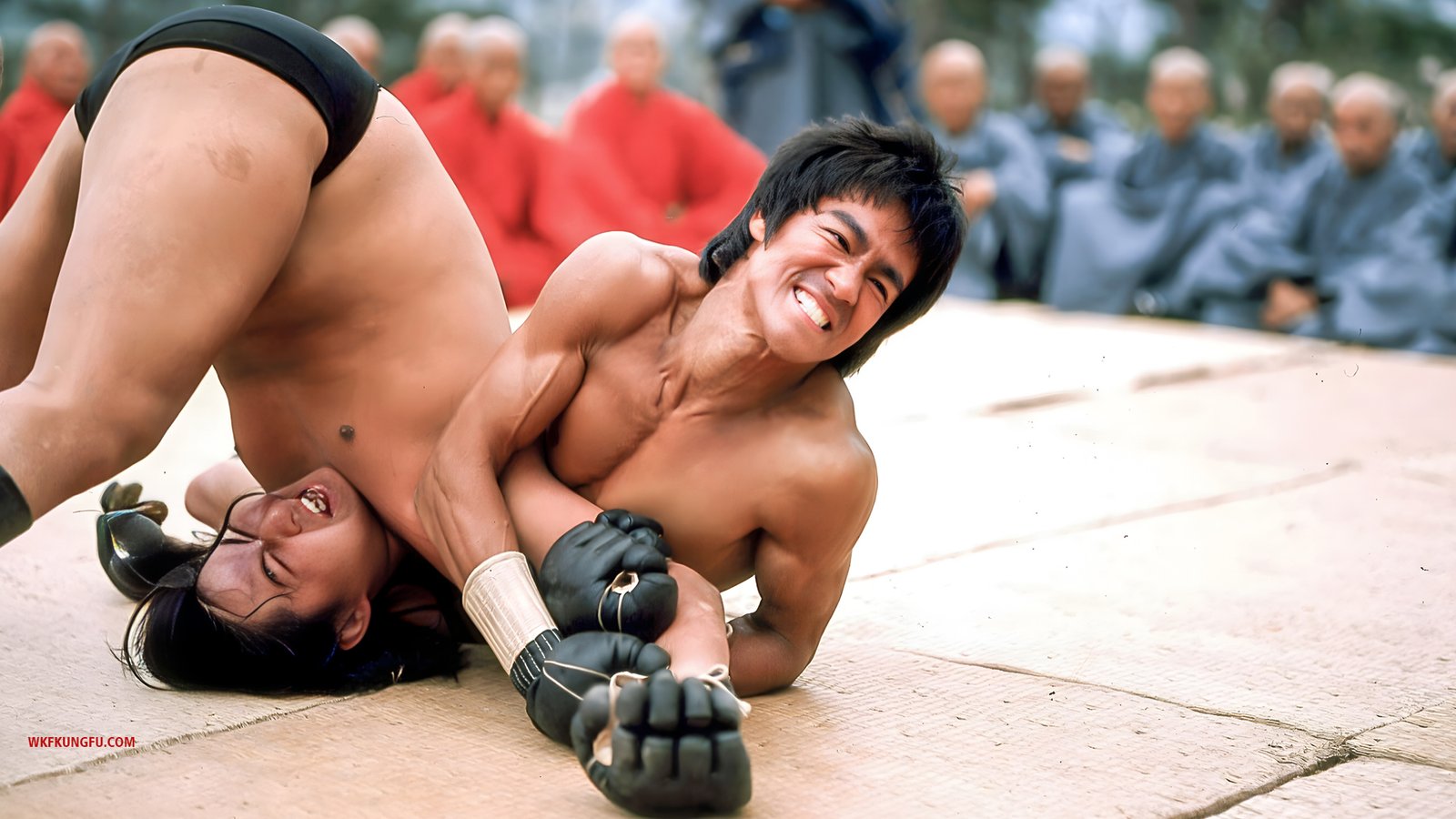
While Lee never stepped into a modern mixed martial arts cage, UFC Chief Executive Officer Dana White famously dubbed him the “Father of Modern MMA.” To many, this title might seem surprising given Lee’s roots in traditional Chinese martial arts. However, a deeper look into his philosophy, training methods, and legacy reveals that Lee did not just anticipate the era of mixed combat—he laid its intellectual foundation.
1. Breaking the Dogma: The Philosophy of Jeet Kune Do
Before the rise of modern cross-style combat, martial arts disciplines were deeply compartmentalized. A karateka practiced karate, a boxer stuck to hands, and a wrestler focused strictly on takedowns. Traditional styles were often bound by rigid routines (taolu), static postures, and strict adherence to historical lineage.
Bruce Lee, who began his journey under Grandmaster Ip Man in Wing Chun Kung Fu, recognized the limitations of sticking strictly to one system. In creating his martial system, Jeet Kune Do (JKD), Lee formulated a revolutionary rule:
“Research your own experience. Absorb what is useful, reject what is useless, add what is specifically your own.”
This core philosophy is the exact guiding principle of modern MMA. Today, no high-level fighter relies on a single discipline. Success in the octagon requires blending striking, wrestling, and submission grappling—precisely as Lee advocated decades prior.
2. Pushing for “Alive” Training and Real-World Functionality
Lee was critical of martial arts systems that focused purely on non-contact forms without pressure testing. He argued that traditional martial arts had become overly theatrical, comparing a non-contact practitioner trying to fight to a swimmer trying to swim on dry land.
To bridge this gap, Lee pioneered concepts that are now standard in modern fighter camps:
- Full-Contact Sparring: Lee insistence on dynamic, unscripted sparring with protective gear to safely simulate full-contact combat.
- Cross-Training Across Ranges: JKD divided combat into distinct ranges—kicking, punching, trapping (clinch), and grappling—preempting the multi-range demands of modern MMA.
- Physical Conditioning: Lee approached fitness with a scientific mindset, incorporating heavy weight training, high-intensity cardio, and tailored nutrition long before sports science became standard in martial arts academies.
3. The Fusion of Styles: From Wing Chun to Western Boxing
Lee did not abandon his traditional roots; rather, he evolved them. He took the centerline theory and quick hand-trapping of Wing Chun Kung Fu and fused them with:
- The evasive footwork and distance control of Western Olympic Fencing.
- The head movement, jab dynamics, and body mechanics of Western Boxing.
- The fluid kicking mechanics of styles like Savate and Northern Style Kung Fu.
This synthesis demonstrated that Kung Fu is not a static artifact, but a living, adaptable approach to combat—a mindset that directly fueled modern Chinese combat systems like Sanda (Sanshou).
4. Influencing a Generation of Champions
Lee’s impact extended beyond martial philosophy into the minds of modern combat sports icons. Champions across eras—from Jon Jones and Tony Ferguson to Anderson Silva and Zhang Weili—have cited Lee’s footwork, trapping techniques, and mental conditioning as direct inspirations.
When the Ultimate Fighting Championship (UFC) launched in 1993 to test style-versus-style efficiency, it put Lee’s central hypothesis to the test on a global stage. The answer was clear: the ultimate fighter must be adaptable, multi-disciplined, and fluid.
The Legacy Preserved: Martial Arts as a Living Evolution
Bruce Lee demonstrated that true Kung Fu—meaning mastery achieved through hard work and practice—is not defined by fixed styles, but by constant growth and adaptability.
At the World Kungfu Federation, we honor traditional lineage while embracing the dynamic evolution of Chinese martial arts. Bruce Lee showed the world that Chinese martial philosophy holds the answers to modern combat challenges. By challenging tradition to make it stronger, he earned his place in history not only as an icon of cinema and Kung Fu, but as the conceptual father of modern mixed martial arts.